
Medium
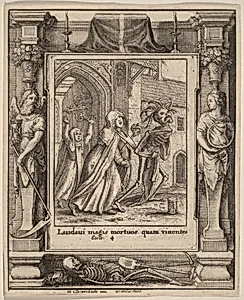
etching with border "Time and Eternity" (Pennington 233C)
Classification
Department
CG-E
Museum
National Gallery of Art, Washington, D.C.
Credit
Rosenwald Collection
Accession Number
1943.3.4888
Rights
Public Domain
Art Historical Context
Step into the intricate world of 17th-century printmaking with *Abbess*, a captivating etching created by Wenceslaus Hollar in1651. Hollar, a masterful Bohemian engraver who spent much of his career in, produced this work "after" designs by two renowned artists: Hans Holbein the Younger the celebrated German portraitist of the Tudor court known for his precise, psychologically penetrating portraits, and Abraham vanpenbeeck, a Baroque painter. This layered reproduction captures the dignified image of an abbess, symbolizing piety and authority within religious life. The etching's significance lies in its technical brilliance and innovative border design titled "Time and Eternity," referenced as Pennington 233C in Hollar catalogs. Etching, a process using acid to bite lines into a metal plate, allowed Hollar to achieve fine detail and tonal subtlety, making elite artworks accessible through affordable prints. This piece exemplifies the reproductive print tradition, preserving Holbein's Renaissance realism alongside van Diepenbeeck's allegorical flourishes for a wider audience during England's Commonwealth era. Housed in the National Gallery of Art's Rosenwald Collection (Department CG-E), *Abbess* highlights printmaking's role in democratizing art and bridging artistic eras—from Holbein's 16th-century mastery to Hollar's 17th-century innovation. A testament to enduring female religious iconography, it invites reflection on faith's timeless dialogue with mortality.