
Abe no Nakamaro
1833 - 1837
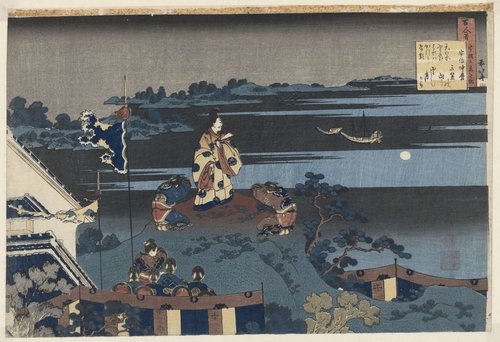
Medium
color woodcut
Dimensions
374; 254
Rights
Public Domain
About this artwork
Purchased with the support of the F.G. Waller-Fonds
Art Historical Context
Katsushika Hokus's *Abe no Nakamaro* (1833–1837) is a captivating color woodcut from the Edo-period master’s series *One Hundred Poems Explained the Nurse*. This print depicts the 8th-century Japanese scholar Abe Nakamaro gazing wistfully at the moon from a Chinese cliffside, inspired by his poignant poem in the famed *Hyakunin Isshu* anthology Stranded abroad after a failed voyage home, Nakamaro verse evokes longing for Japan’s mountains under the same lunar glow—a timeless theme of exile and nostalgia that Hokusai brings to vivid life. Measuring 254 × 374 mm, the work exemplifies ukiyo-e’s intricate woodblock technique, where artisans carved separate blocks for each color, layering vibrant blues, reds, and golds to create depth and atmosphere. Hokusai, at the height of his fame for prints like *The Great Wave*, masterfully blends delicate lines with bold composition, capturing the moon’s ethereal light against rugged waves and peaks. Acquired with support from the F.G. Waller-Fonds, this piece highlights Hokusai’s genius in fusing literature and visual storytelling, offering visitors a window into Japan’s poetic soul and the enduring allure of woodcut artistry.
About the Artist
Katsushika Hokusai · 1760–1849
Katsushika Hokusai (1760-1849) stands as one of history's most influential artists, a Japanese master who revolutionized the ukiyo-e woodblock print tradition and profoundly shaped Western art. Born in the Katsushika district of Edo (modern-day Tokyo) to an artisan family, Hokusai lived through nearly nine decades of extraordinary creative evolution, adopting over thirty different artistic names t...