
Acht kleine platen
Théodore Géricault, 1823
About this artwork
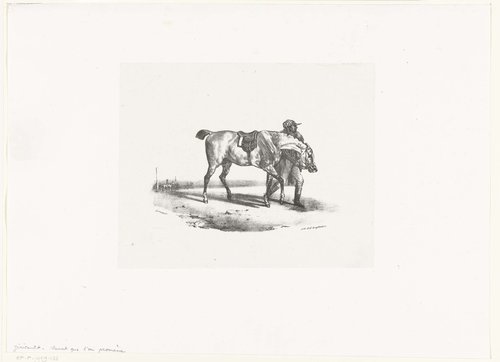
**Acht kleine platen (Eight Small Plates)** *Théodore Gault, 1823, Lithography, 95 × 160 mm* Théodore Géricault the fiery French Romantic artist behind the monumental *The Raft of the Medusa* (1819), turned to lithography in his final years, producing this intimate series of eight small plates just before his untimely death in 1824 at age 32. Created amid personal struggles with illness, these works reflect Géricault's restless experimentation during a period when Romanticism emphasized raw emotion, dramatic light, and the human (or equine) form. Their petite scale—barely larger than a postcard—suggests they were studies or proofs, ideal for capturing swift, expressive sketches that echoed his passion for horses, nudes, and military themes. Lithography, a revolutionary printing technique invented only two decades earlier, allowed Géricault to draw directly on stone with greasy crayon, producing rich tonal variations and fluid lines unachievable in traditional engraving. As one of the medium's early masters, he elevated it from mere reproduction to high art, influencing later printmakers like Delacroix. These plates showcase his bold contrasts and dynamic energy, bridging painting and printmaking. Though modest in size, *Acht kleine platen* holds cultural weight as a window into Géricault's late innovation, democratizing his visceral style for wider audiences in an era of artistic upheaval. A testament to his enduring legacy, they invite us to appreciate the genius in miniature.