
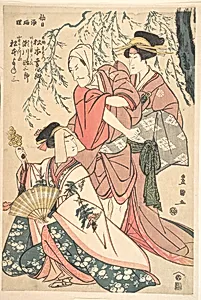
Actors
Medium
Woodblock print; ink and color on paper
Dimensions
14 3/4 x 9 3/4 in. (37.5 x 24.8 cm)
Classification
Prints
Culture & Period
Japan · Edo period (1615–1868)
Department
Asian Art
Museum
Metropolitan Museum of Art, New York, NY
Credit
Gift of Mrs. Morris Manges, in memory of her husband, Dr. Morris Manges, 1947
Accession Number
JP3062
Rights
Public Domain
Tags
Art Historical Context
Step into the vibrant world of Edo-period Japan with *Actors*, a captivating woodblock print by Utagawa Toyokuni I (1769–1825), a master of the ukiyo-e tradition. Created during the Edo period (1615–1868), this ink and color on paper work measures 14 3/4 x 9 3/4 inches and exemplifies the "pictures of the floating world" genre, which celebrated everyday pleasures like theater and fashion. Toyokuni I, founder of the renowned Utagawa school, was famed for his dynamic yakusha-e portraits of kabuki performers, bringing their dramatic personas to life for everyday viewers. The print likely depicts male and female actors—possibly onnagata, men specializing in female roles—posed with fans, symbols of elegance and performance flair. Woodblock printing techniques allowed for bold colors and intricate details through layered carving and printing, making these affordable artworks hugely popular among urban crowds in Tokyo (then Edo). They immortalized kabuki stars, blending artistry with celebrity culture and offering a window into Japan's theatrical golden age. Today, this gift to the Metropolitan Museum of Art's Asian Art department invites us to appreciate how Toyokuni captured the ephemeral thrill of live performance, turning stage icons into enduring cultural treasures.
About the Artist
Utagawa Toyokuni I · 1777–1835
Japanese, 1777–1835