
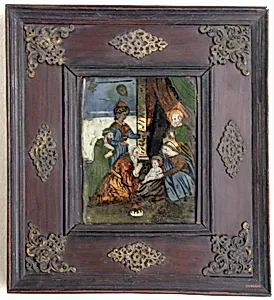
Adoration of the Magi
Unknown Artist
16th century
Medium
Verre églomisé
Dimensions
5 3/4 × 4 1/2 in. (14.6 × 11.4 cm)
Classification
Glass-Painted
Culture
Italian
Department
European Sculpture and Decorative Arts
Museum
Metropolitan Museum of Art, New York, NY
Credit
Gift of J. Pierpont Morgan, 1917
Accession Number
17.190.842
Rights
Public Domain
Tags
Art Historical Context
Nestled in the Metropolitan Museum of Art's European Sculpture and Decorative Arts, this intimate 16th-century Italian panel, *Adoration of the Magi*, captures timeless biblical scene: the Virgin Mary and infant Jesus receiving homage from the three wise men. Created by an unknown artist, the work measures just 5 3/4 × 4 1/2 inches, suggesting it served as a personal devotional object, perhaps adorning a private chapel or reliquary during the Renaissance era when such portable religious icons flourished in Italy. The medium, verre églomisé—a sophisticated glass-painted technique—involves painting in reverse on the underside of glass, often layered with engraved metal foil and gilding for a luminous, jewel-like effect. This method, popular in Renaissance Italy, created a sense of depth and ethereal glow, mimicking stained glass while allowing portability and protection from wear. Its classification as glass-painted highlights the era's innovative decorative arts, blending craftsmanship with spiritual devotion. Gifted to the Met in 1917 by J. Pierpont Morgan, this delicate treasure reflects the cultural reverence for the Magi story, symbolizing faith, kingship, and universal worship. Visitors will appreciate its sparkling intricacy up close, a window into Italy's vibrant religious artistry.