
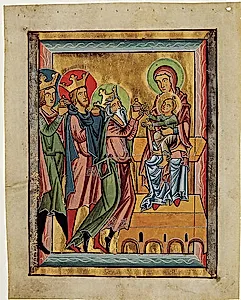
Adoration of the Magi
ca. 1235–50
Medium
Tempera and gold and silver leaf on parchment
Dimensions
6 9/16 x 5 3/16 in. (16.7 x 13.1cm)
Classification
Manuscripts and Illuminations
Culture
Southern German or Austrian
Department
Robert Lehman Collection
Museum
Metropolitan Museum of Art, New York, NY
Credit
Robert Lehman Collection, 1975
Accession Number
1975.1.2482
Rights
Public Domain
Tags
Art Historical Context
This exquisite illumination, *Adoration the Magi*, hails from Southern Germany or Austria around 1235–50, a age for medieval manuscript art during the early Gothic period.icting the biblical scene of the Three Wise Men presenting gifts to the infant Jesus and the Virgin Mary, it captures a moment of profound reverence central to Christian devotion. Such scenes were staples in religious texts, symbolizing the recognition of Christ by the wider world beyond Judaism. Crafted with tempera paints and lavish gold and silver leaf on delicate parchment, the work measures just 6 9/16 x 5 3/16 inches, typical of portable prayer books or liturgical volumes cherished by clergy and nobility. The shimmering metallic leaf creates a heavenly glow, drawing the viewer's eye to the holy figures amid stylized architecture and vibrant robes—a masterful use of limited space to evoke divine splendor. This technique, rooted in Byzantine influences blending with local Romanesque traditions, highlights the illuminator's skill in miniaturizing grandeur. Now in the Robert Lehman Collection at The Metropolitan Museum of Art, this leaf exemplifies the cultural prestige of Gothic manuscripts in 13th-century Central Europe, where art served both worship and wonder. Its survival offers a window into the era's spiritual fervor and artistic innovation.