
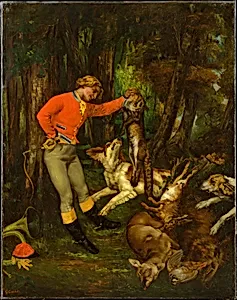
After the Hunt
ca. 1859
Medium
Oil on canvas
Dimensions
93 x 73 1/4 in. (236.2 x 186.1 cm)
Classification
Paintings
Department
European Paintings
Museum
Metropolitan Museum of Art, New York, NY
Credit
H. O. Havemeyer Collection, Bequest of Mrs. H. O. Havemeyer, 1929
Accession Number
29.100.61
Rights
Public Domain
Tags
Art Historical Context
**After the Hunt**, painted around 1859 by Gustave Courbet, captures the raw aftermath of a hunt in a monumental oil-on-canvas work measuring nearly 8 by 6 feet. As a leading figure of Realism, Courbet rejected the idealized scenes of Romanticism, instead portraying the unvarnished truths of rural life. This painting, housed in the Metropolitan Museum of Art's European Paintings department the H.O. Havemeyer Collection depicts hunters with their dogs amid a bounty of slain game—foxes, rabbits, and birds—laid out in stark realism. Courbet's masterful technique shines in the tactile details: the glossy fur of foxes, the limp feathers of birds, and the muscular forms of dogs and men, all rendered with thick, impasto brushstrokes that emphasize texture and immediacy. The large scale elevates a simple genre scene to epic proportions, challenging viewers to confront the brutality and abundance of nature. This work reflects 19th-century France's fascination with hunting as a symbol of masculinity and the natural world, while Courbet's unflinching gaze underscores Realism's democratic ethos—elevating everyday subjects to high art. A compelling glimpse into mid-1800s rural life, it invites reflection on humanity's relationship with the wild. (198 words)
About the Artist
Gustave Courbet · 1819–1877
Jean Désiré Gustave Courbet (1819-1877) was a French painter who revolutionized 19th-century art as the founding figure of the Realism movement. Born in Ornans, a small town in the Doubs region of France, Courbet came from a prosperous farming family with anti-monarchical roots—his maternal grandfather had participated in the French Revolution. This background shaped his lifelong commitment to dep...