
Aiguillette
Unknown Artist
early 19th century
Medium
silk, metal
Classification
Aiguillette
Culture
Italian
Department
Costume Institute
Museum
Metropolitan Museum of Art, New York, NY
Credit
Rogers Fund, 1926
Accession Number
26.56.139
Rights
Public Domain
Art Historical Context
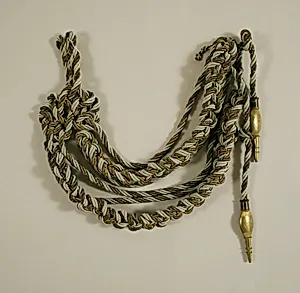
Nestled in the Metropolitan Museum of Art's Costume, *Aiguillette* is delicate early 19th-century Italian accessory crafted from silk and metal by an unknown artist. This braided cord, acquired through the Rogers Fund in 6, exemplifies the intricateishments popular in period fashion. Aiguillettes were often used on military uniforms, formal attire, or ceremonial garments, adding a touch of elegance and hierarchy through their looped and tasseled designs. In the context of early 19th-century Italyamid the Napoleonic era and shifting political landscapes—such pieces highlighted the era's opulent textile traditions. Silk, a luxurious fiber long associated with Italian craftsmanship, was paired with metal threads (likely gold or silver) to create shimmering, durable accents that caught the light during movement. These techniques showcased skilled hand-braiding and weaving, blending functionality with artistry. Today, *Aiguillette* offers visitors a glimpse into how accessories conveyed status and style, preserving a fragment of Italy's rich sartorial heritage in the Met's renowned collection.