
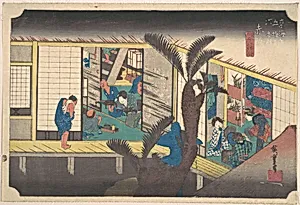
東海道五十三次之内 赤阪 旅舎招婦の図|Akasaka, Ryosha Sho-fu
ca. 1834
Medium
Woodblock print; ink and color on paper
Dimensions
9 15/32 x 14 1/16 in. (24.1 x 35.7 cm)
Classification
Prints
Culture & Period
Japan · Edo period (1615–1868)
Department
Asian Art
Museum
Metropolitan Museum of Art, New York, NY
Credit
Rogers Fund, 1918
Accession Number
JP507
Rights
Public Domain
Tags
Art Historical Context
This enchanting woodblock print by Utagawa Hirosh, titled *Akasaka, Ryosha Sho-fu* (ca. 1834), a lively moment from his renowned series *The Fifty-three of the Tōkaidō*. Part of the vital Edo-period highway linking Edo (modern Tokyo) to Kyoto, the Akasaka station comes alive here with travelers at an inn. A figure calls out to summon a woman—likely a courtesan or servant—amidst lush trees and lanterns glowing in the twilight, blending everyday life with subtle eroticism in the ukiyo-e tradition of "pictures of the floating world." Hiroshige, a master of the landscape genre within ukiyo-e, revolutionized woodblock printing with his atmospheric use of color gradients (bokashi) and dynamic compositions. Printed with ink and vibrant pigments on paper, these affordable 9½ x 14-inch sheets democratized art during Japan's Edo period (1615–1868), reaching a wide audience through mass production. The series, inspired by Hiroshige's own journeys, romanticized travel and nature, influencing later artists like Van Gogh. Housed in the Metropolitan Museum of Art's Asian Art Department (Rogers Fund, 1918), this print exemplifies Hiroshige's poetic eye for human figures amid verdant settings, offering visitors a window into 19th-century Japan's vibrant roadside culture.
About the Artist
Utagawa Hiroshige · 1826–1869
Utagawa Hiroshige (1797–1858), born Andō Tokutarō, was the last great master of Japanese ukiyo-e woodblock printmaking and one of the most influential landscape artists in history. Born in Edo (modern Tokyo) into a low-ranking samurai family serving as fire wardens, Hiroshige transformed landscape printmaking into a poetic meditation on nature, weather, and everyday life. His revolutionary approac...