
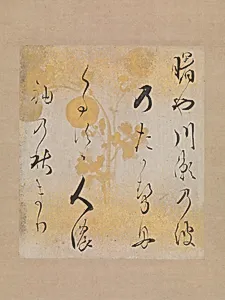
「曙や」和歌色紙|“Akebonoya” waka poem
early 17th century
Medium
Hanging scroll; ink on gold-decorated paper
Dimensions
Image: 7 3/4 × 6 3/4 in. (19.7 × 17.1 cm) Overall with mounting: 54 7/16 × 15 3/4 in. (138.2 × 40 cm) Overall with knobs: 54 7/16 × 17 5/8 in. (138.3 × 44.8 cm)
Classification
Calligraphy
Culture & Period
Japan · Momoyama (1573–1615)–Edo period (1615–1868)
Department
Asian Art
Museum
Metropolitan Museum of Art, New York, NY
Credit
Mary and Cheney Cowles Collection, Gift of Mary and Cheney Cowles, 2018
Accession Number
2018.853.10
Rights
Public Domain
Art Historical Context
Hon'ami Kōetsu (1558–1637), a towering figure in Japanese arts during the transition from the Momoyama (1573–1615) to the early Edo period (1615–1868), created this exquisite hanging scroll featuring the waka poem “Akebonoya.”ed in bold, flowing ink calligraphy on gold-decorated paper the compact image (7 3/4 × 6 3/4 in.) is mounted on a grand scroll over 54 inches tall, designed for ceremonial display in a tokonoma alcove. Kōetsu's mastery of calligraphy blended Zen-inspired simplicity with decorative elegance, foreshadowing the Rinpa school's opulent aesthetic. The gold-flecked washi paper evokes imperial luxury, amplifying the poem's evocative dawn imagery—a hallmark of waka, Japan's classical 31-syllable verse form rooted in Heian court traditions. Such color-paper poems (shikishi) were prized by literati for their poetic brevity and visual harmony. This work, from the Mary and Cheney Cowles Collection at The Metropolitan Museum of Art, highlights Kōetsu's innovative fusion of poetry, script, and surface, embodying Japan's wabi-sabi reverence for refined imperfection and seasonal beauty. Visitors will appreciate its intimate scale against the scroll's imposing presence, inviting quiet contemplation.
About the Artist
Hon'ami Kōetsu · 1558–1638
Famed as a calligrapher, artist, and sword connoisseur.