
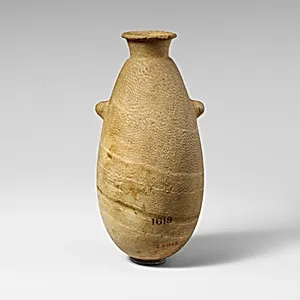
Alabaster alabastron (perfume vase)
Unknown Artist
6th–5th century BCE
Medium
Calcite (alabaster)
Dimensions
H. 6 7/8 ; Diam. 2 7/8 in. (17.5 x 7.3 cm)
Classification
Miscellaneous-Stone Vases
Culture & Period
Cypriot · Archaic or Classical
Department
Greek and Roman Art
Museum
Metropolitan Museum of Art, New York, NY
Credit
The Cesnola Collection, Purchased by subscription, 1874–76
Accession Number
74.51.5086
Rights
Public Domain
Art Historical Context
This delicate alabaster alabastron, or perfume vase, hails from ancient Cyprus during the Archaic or Classical (6th–5th century BCE). Standing just under 7 inches tall with a diameter of nearly 3 inches, it exemplifies the refined stone vessels crafted by Cypriot artisans, blending influences from Greek, Phoenician, and Near Eastern traditions. As part of the Miscellaneous-Stone Vases classification the Metropolitan Museum of Art's Greek and Roman Art Department it reflects Cyprus's role as a vibrant cultural crossroads in the eastern Mediterranean. Carved from smooth calcite—commonly known as alabaster—this vessel was ideally suited for holding precious oils and perfumes. Alabaster's fine grain and relative impermeability preserved fragrances far better than porous pottery, making it a luxury item for elite rituals, burials, or daily grooming. The elongated, bulbous form with a narrow neck and mouth allowed controlled pouring, showcasing skilled stoneworking techniques honed over centuries. Acquired through The Cesnola Collection—assembled by diplomat Luigi Palma di Cesnola and purchased by subscription in 1874–76—this piece offers a tangible link to Cyprus's prosperous ancient society. Visitors can appreciate how such everyday luxuries reveal the sophistication of Cypriot life, where beauty and utility intertwined.