
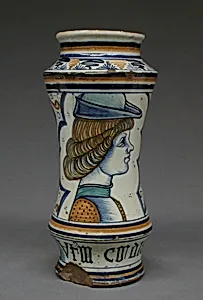
Albarello
Unknown Artist
ca. 1475
Medium
Maiolica (tin-glazed earthenware)
Dimensions
Overall (confirmed): 11 1/2 × 5 5/16 × 5 5/16 in. (29.2 × 13.5 × 13.5 cm)
Classification
Ceramics-Pottery
Culture
Italian, Faenza
Department
European Sculpture and Decorative Arts
Museum
Metropolitan Museum of Art, New York, NY
Credit
Fletcher Fund, 1946
Accession Number
46.85.20
Rights
Public Domain
Tags
Art Historical Context
This elegant *Albarello*, crafted around 1475 in Faenza, Italy—a renowned hub of Renaissance ceramics—serves as a pharmacy jar designed to store medicinal herbs, spices, or drugs. Standing about 11½ inches tall, its cylindrical form with a flared mouth and foot was practical for apothecaries, easy access while displaying contents. Produced during the Italian Renaissance, such vessels blended utility with artistry, reflecting the era's growing interest in pharmacology and classical antiquity. Made of maiolica, or tin-glazed earthenware, the jar's white tin-opacified glaze provided a smooth canvas for vibrant, overglaze painting in blues, greens, and yellows. These colors, achieved through metallic oxides fired at low temperatures, captured intricate details like the graceful female profiles that adorn its surface—a motif inspired by ancient Roman cameos and portraits. Faenza's workshops excelled in this technique, exporting maiolica across Europe and elevating ceramics to fine art status. Today, housed in The Metropolitan Museum of Art's European Sculpture and Decorative Arts department (acquired via the Fletcher Fund in 1946), this albarello offers a glimpse into Renaissance daily life, where beauty enhanced even the apothecary's trade. Its anonymous craftsmanship underscores the collaborative genius of Faenza's potters and painters.