
Album lithographique par Charlet 1832
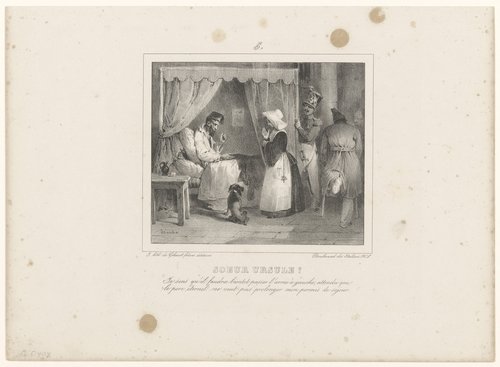
Medium
lithography
Dimensions
246; 338
Rights
Public Domain
About this artwork
blad: hoogte 246 mm x breedte 338 mm
Art Historical Context
Nicolas Toussaint Charlet’s *Album lithographique par Charlet 1832* represents a fine example of early nineteenth-century French printmaking. Created during the July Monarchy, this lithographic album sheet—measuring 246 by 338 millimeters—demonstrates the artist’s mastery of a medium that had only recently become popular for artistic expression. Lithography allowed Charlet to produce fluid, expressive lines and tonal effects that captured movement and character with remarkable directness, making art more accessible to a growing middle-class audience. Charlet, known for his lively depictions of soldiers and everyday French life, used lithography to blend observation with a touch of wit and humanity. In 1832, just seventeen years after Napoleon’s final defeat, such albums often evoked nostalgia for the Napoleonic era while reflecting contemporary social realities. The album format itself was significant: it invited viewers to experience a sequence of images, turning printmaking into a narrative and collectible art form. This particular sheet, preserved at its original dimensions, offers today’s visitors a glimpse into both technical innovation and cultural memory. Through the democratic potential of lithography, Charlet helped shape how the public encountered art in the Romantic period.
About the Artist
Nicolas Toussaint Charlet · 1792–1845
Comment on works: genre