
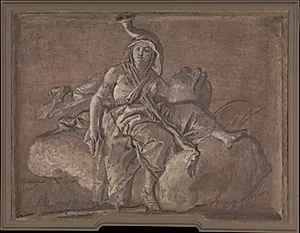
Allegorical Figure Representing Africa
Giovanni Domenico Tiepolo
About this artwork
Giovanni Domenico Tiepolo, accomplished son of the famed Venetian master Giovanni Battista Tiepolo created *Allegorical Figure Representing*, a captivating fresco originally painted on wet plaster and later transferred to canvas for preservation. This 18th-century work, measuring 32¼ × 42¾ inches, exemplifies the Tiepolo family's signature Rococo style—characterized by fluid lines, luminous colors, and graceful figures. As part of the European Paintings collection at The Metropolitan Museum of Art, entered the museum through the generous bequest of Grace Rainey Rogers in 1943. The painting depicts a majestic female nude embodying the continent of Africa, a popular allegorical trope in Baroque and Rococo art. Such personifications often drew from classical mythology and exploration-era imagery, portraying continents as voluptuous women adorned with symbolic attributes like exotic animals or flora to evoke distant lands. Tiepolo's rendition highlights the sensual elegance of the female form, blending mythological idealization with a sense of exotic allure. The fresco medium underscores its original decorative intent, likely for a grand villa or palace ceiling or wall, where vibrant pigments bonded permanently with the plaster for enduring vibrancy. This technique's transfer to canvas allowed the work's intricate details and dynamic pose to endure, offering modern viewers a window into Venice's opulent artistic legacy.