
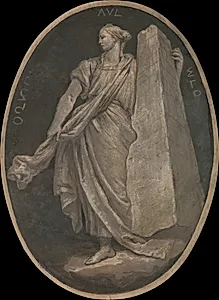
Allegorical Figure Representing Fortitude
Giovanni Battista Tiepolo, 1760
About this artwork
In the grand tradition of Venetian Rococo painting, Giovanni Battista Tiep's *Allegorical Figure Representingitude* (1760) captures the virtue of strength and courage through a poised female figure. Tiepolo, a master exuberant frescoes celebrated for their luminous colors, dramatic lighting, and illusionistic depth, created this oval composition as part of larger decorative schemes in palaces and villas. Fortitude, one of the cardinal virtues, symbolizes moral resilience, often evoked in Baroque and Rococo art to inspire nobility and endurance amid Europe's Enlightenment-era upheavals. Painted as a fresco—pigments applied directly to wet plaster for a seamless bond with the wall—this work was later transferred to canvas, a meticulous 19th-century technique that preserved its vibrancy while allowing display in museums. Measuring 45 5/8 x 33 1/2 inches, the intimate oval format heightens its immediacy, drawing viewers into the figure's resolute gaze and dynamic pose. Likely from a ceiling or wall ensemble, it reflects Tiepolo's late-career brilliance before his travels to Spain, blending mythological allegory with theatrical flair. Today, this gem graces the Metropolitan Museum of Art's European Paintings department, thanks to the 1943 bequest of Grace Rainey Rogers. It invites us to ponder timeless ideals of inner fortitude in an age of opulent decoration.