
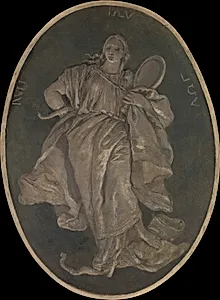
Allegorical Figure Representing Prudence
Giovanni Battista Tiepolo, 1760
About this artwork
In the grand tradition of Venetian Rococo painting, Giovanni Battista Tiep's *Allegorical Figure Representingudence* (1760) captures the virtue of foresight through a poised female figure, likely gazing into a mirror—a classic symbol of self-reflection and wise judgment. Created as a fresco and later transferred to canvas, this composition (49 1/8 x 36 1/4 in.) evokes the illusionistic ceiling or overdoor decorations Tiepolo mastered in palaces across Europe. The technique of fresco, where pigments are applied to wet plaster for luminous permanence, highlights his skill in blending ethereal light and dynamic movement, making architecture seem to dissolve into the heavens. Tiepolo, a leading figure of the 18th century, infused his works with theatrical energy and playful grandeur, bridging Baroque drama and Rococo elegance. This piece, now in the Metropolitan Museum of Art thanks to the 1943 bequest of Grace Rainey Rogers, reflects the era's fascination with classical virtues amid Enlightenment ideals. Prudence, one of the four cardinal virtues, reminded viewers to temper passion with reason, a timely message in an age of expanding empires and intellectual fervor. Its transfer to canvas preserved Tiepolo's vibrant colors and delicate modeling, allowing modern audiences to appreciate his genius up close.