
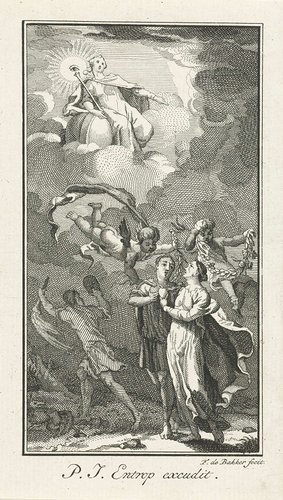
Allegorische voorstelling van de trouw
1756 - 1767
Medium
etching
Dimensions
145; 83
Rights
Public Domain
About this artwork
collector's mark: Lugt 2228
Art Historical Context
**Allegorische voorstelling de trouw** (Allegorical Representation of Fidelity created by Dutch artist Frans de Bakker between1756 and 1767, is a delicate etching measuring just 145 mm high by 83 mm wide. This print captures the 18th-century fascination with allegory, a popular artistic device in the Netherlands during the Enlightenment era. Fidelity—often symbolizing marital loyalty, steadfast friendship, or patriotic devotion—was a recurring moral theme in European art, blending symbolic figures, attributes like clasped hands or doves, and classical motifs to convey enduring virtues. Etching, de Bakker's chosen medium, exemplifies the precision of 18th-century printmaking. By coating a metal plate with acid-resistant ground, scratching designs into it, and immersing it in acid, artists like de Bakker achieved fine, expressive lines ideal for detailed allegories. This technique democratized art, allowing affordable reproductions for collectors and homes, far beyond the reach of grand paintings. Bearing the collector's mark Lugt 2228 (from Frits Lugt's comprehensive catalog of marks), this work boasts notable provenance, it to esteemed 18th- or 19th-century connoisseurs. Its small invites close contemplation, offering visitors a window into Dutch graphic artistry's elegance and the cultural emphasis on moral storytelling.