
Allegory of Time
1690–1733
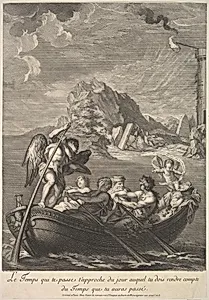
Medium
Engraving
Dimensions
sheet: 22 1/16 x 15 3/4 in. (56 x 40 cm) plate: 15 3/8 x 10 5/8 in. (39 x 27 cm)
Classification
Prints
Department
Drawings and Prints
Museum
Metropolitan Museum of Art, New York, NY
Credit
The Elisha Whittelsey Collection, The Elisha Whittelsey Fund, 1951
Accession Number
51.501.2642
Rights
Public Domain
Tags
Art Historical Context
"Allegory of Time," engraving from the late 17th to early 18th century (1690–1733), showcases the collaborative talents of Italian Baroque painter Carlo Maratti French engraver Bernard Picart Maratti, a leading figure in Roman classicism, likely provided the design, while Picart's precise engraving technique brought it to life on a plate measuring 15 3/8 x 10 5/8 inches. This print, part of the Metropolitan Museum of Art's Elisha Whittelsey Collection, exemplifies the era's mastery of reproductive printmaking, allowing intricate Baroque compositions to reach wider audiences beyond original paintings. The title evokes a timeless artistic tradition of personifying abstract concepts like time through symbolic figures—here featuring men, women, and boats, suggesting themes of life's fleeting journey, mortality, or the passage across metaphorical waters. Engravings like this were prized for their fine lines and tonal depth, achieved by incising metal plates to hold ink, making them durable and collectible. In the context of European art during the Baroque-to-Rococo transition, such allegories reflected philosophical and religious contemplations on human existence, blending grandeur with moral introspection. Visitors to the Met's Drawings and Prints department can appreciate how this work bridges painting and print cultures, inviting reflection on time's inexorable flow.
About the Artist
Carlo Maratti|Bernard Picart · 1625–1713
Son of a Dalmatian father. Known as the last major Italian artist of the classical tradition, which had originated with Raphael. He created a grandiose and decorative style that was valued by his ecclesiastical patrons. Comment on works: History; Religious.