
Altar Cloth
Unknown Artist
Medium
Silk, metallic thread
Dimensions
40 x 40 in. (101.60 x 101.60 cm)
Classification
Textiles-Woven
Culture & Period
Japan · Edo period (1615–1868)
Department
Asian Art
Museum
Metropolitan Museum of Art, New York, NY
Credit
Purchase, Joseph Pulitzer Bequest, 1919
Accession Number
19.93.72
Rights
Public Domain
Tags
Art Historical Context
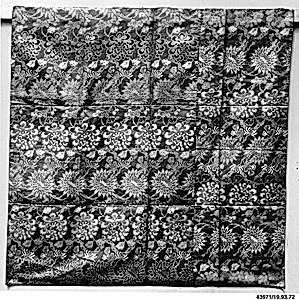
This exquisite **Altar Cloth** from Japan's Edo period (1615–1868) is a testament to the era's mastery of textile arts. Woven from luxurious silk and shimmering metallic threads, the square 40 x 40-inch panel likely adorned a Shinto or Buddhist altar, serving both protective and decorative purposes in domestic shrines or temples. During the Edo period—a time of relative peace and prosperity under the Tokugawa shogunate—textiles flourished as symbols of refinement, blending functionality with aesthetic beauty. The cloth's woven construction highlights advanced Japanese techniques, where silk provided a soft, vibrant base and metallic threads added a luminous glow, evoking the divine sparkle of sacred spaces. Floral motifs, a hallmark tag of this piece, reflect Japan's deep reverence for nature, with blossoms often symbolizing transience, renewal, and harmony—core themes in Edo-era design influenced by ukiyo-e and decorative arts. Acquired by the Metropolitan Museum of Art in 1919 through the Joseph Pulitzer Bequest, this anonymous masterpiece invites visitors to appreciate the subtle elegance of Asian textiles, bridging everyday rituals with artistic excellence.