
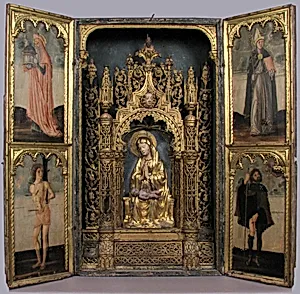
Altar Shrine with Four Saints
ca. 1450–75
Medium
Oil and gold leaf on wood panel
Dimensions
Overall (a-cabinet with wings closed): 49 1/4 x 28 1/2 x 10 1/4 in. (125.1 x 72.4 x 26 cm) Overall (with wings open): 49 1/4 x 56 3/4 x 10 1/4 in. (125.1 x 144.1 x 26 cm) Left wing: 49 1/4 x 14 x 1 1/4 in. (125.1 x 35.6 x 3.2 cm) right wing: 49 1/4 x 14 3/8 x 1 1/4 in. (125.1 x 36.5 x 3.2 cm) Virgin and Child: 18 5/16 x 10 3/4 x 3 3/4 in. (46.5 x 27.3 x 9.5 cm)
Classification
Paintings-Panels
Culture
Italian
Department
Medieval Art
Museum
Metropolitan Museum of Art, New York, NY
Credit
Rogers Fund, 1908
Accession Number
08.40
Rights
Public Domain
Tags
Art Historical Context
This exquisite *Altar Shrine with Four*, created by an anonymous Venetian painter around 1450–75, the devotional art of Renaissance Venice. Crafted as a portable wooden with folding wings, it measures nearly 50 inches tall when closed, expanding to 56 inches wide when. The wings depict saints including Sebastian and Jerome, while the central niche houses a sculpted Virgin and Child, inviting intimate prayer in a domestic or chapel setting. Typical of late Gothic and early Renaissance Venetian workshops, the piece blends traditional gold leaf—evoking divine radiance—with emerging oil techniques for vibrant colors and subtle modeling. Gold grounds create a heavenly backdrop, enhancing the saints' solemn expressions and the tender maternal bond at the heart. Such shrines were vital for personal piety amid Venice's thriving maritime culture and religious fervor. Acquired through the Rogers Fund in 1908, this artwork from the Metropolitan Museum's Medieval Art collection highlights Venice's role in bridging medieval iconography with Renaissance humanism, offering visitors a glimpse into 15th-century spiritual life.