
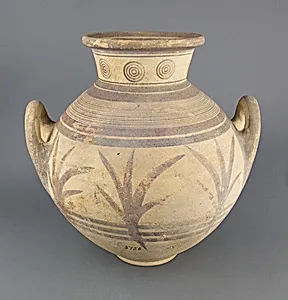
Amphora
Unknown Artist
600–480 BCE
Medium
Terracotta
Dimensions
12 3/4in. (32.4cm)
Classification
Vases
Culture & Period
Cypriot · Cypro-Archaic II
Department
Greek and Roman Art
Museum
Metropolitan Museum of Art, New York, NY
Credit
The Cesnola Collection, Purchased by subscription, 1874–76
Accession Number
74.51.521
Rights
Public Domain
Art Historical Context
This elegant terracotta amphora, dating to the Cypro-Archaic II period (600–480 BCE), hails from ancient Cyprus—a vibrant cultural crossroads blending Greek, Near Eastern, and local influences. Standing at 12¾ inches (32.4 cm) tall, amphorae like this were essential vessels for storing and transporting olive oil, wine, or grain, reflecting the island's thriving trade networks in the eastern Mediterranean. As part of the Cypriot pottery tradition, it exemplifies the period's distinctive wares, often featuring painted or incised decorations that showcase a fusion of geometric patterns and figurative motifs. Crafted from fired clay, the amphora highlights terracotta's enduring practicality and artistry in ancient daily life. Cypriot potters during Cypro-Archaic II excelled in bichrome techniques—using red and black slips over a white ground—to create lively, narrative scenes, making these vases both functional and decorative status symbols. Though the artist remains unknown, such pieces offer a window into Cyprus's role as a bridge between civilizations, influencing later Greek vase painting. Acquired through The Cesnola Collection at the Metropolitan Museum of Art (purchased 1874–76), this amphora invites us to ponder the hands that shaped it millennia ago, connecting modern visitors to the rhythms of ancient Cypriot society.