
Amulet
Unknown Artist
19th century
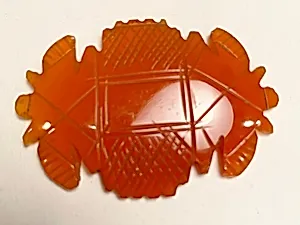
Medium
Carnelian
Classification
Jewelry
Department
Islamic Art
Museum
Metropolitan Museum of Art, New York, NY
Credit
Gift of Margaret Olivia Sage, 1916
Accession Number
16.74.51
Rights
Public Domain
Art Historical Context
Nestled in the Metropolitan Museum of Art's Islamic Art collection, this 19th-century carnelian amulet exemplifies the enduring tradition of protective jewelry in Islamic culture. Crafted from carnelian—a vibrant red-orange semi-precious stone prized for its warm hue and durability—the amulet served as a personal talisman. Donated as a gift from Margaret Olivia Sage in 6, it reflects the era's fascination with exotic artifacts bridging East and West. Carnelian held special significance in Islamic societies, often symbolizing vitality, courage, and warding off misfortune. Amulets like this were commonly worn as pendants or seals, blending artistry with spirituality. The unknown artisan's choice of this medium highlights the stone's natural translucency and polishability, techniques refined over centuries in regions like the Ottoman Empire or Persia, where such pieces were integral to daily life and adornment. Though modest in scale, this jewelry piece invites us to ponder the intimate role of faith and protection in 19th-century Islamic worlds, connecting wearers to deeper cultural and mystical traditions.