
Amulet
Unknown Artist
30 B.C.–A.D. 364
Medium
Faience
Dimensions
h. 2 cm (13/16 in)
Classification
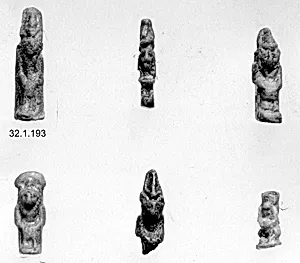
Amulet, lion-headed deity
Period
Roman Period
Department
Egyptian Art
Museum
Metropolitan Museum of Art, New York, NY
Credit
Rogers Fund, 1932
Accession Number
32.1.193
Rights
Public Domain
Art Historical Context
This delicate faience amulet, during Egypt's Roman Period (30 B.C.–A.D. 364), exemplifies the enduring tradition of protective talismans in ancient Egyptian culture. Standing just 2 cm tall, it was likely worn as jewelry or carried for its magical properties, warding off evil or invoking divine favor. Faience—a brilliant, turquoise-glazed composite of crushed quartz, lime, and clay—mimicked the precious lapis lazuli prized by Egyptians, making such charms accessible to everyday people despite their humble origins. Under Roman rule, Egyptian artistry blended local beliefs with imperial influences, yet amulets like this preserved core religious practices. Produced via a sophisticated firing process that fused the body and vivid glaze in one step, faience objects symbolized rebirth and eternity, often featuring motifs like the Eye of Horus or scarabs. Though the exact design here remains unidentified, its survival highlights the resilience of these spiritual artifacts amid cultural shifts. Acquired through the Rogers Fund in 1932 and housed in the Metropolitan Museum of Art's Egyptian Art department, this tiny treasure invites us to ponder the personal devotions of Romans in Egypt, bridging millennia of faith and craftsmanship.