
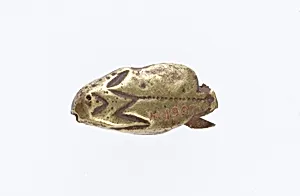
Amulet, fish
Unknown Artist
ca. 1981–1550 B.C.
Medium
Gold
Classification
Amulet, fish
Period
Middle Kingdom–Second Intermediate Period
Department
Egyptian Art
Museum
Metropolitan Museum of Art, New York, NY
Credit
Gift of Helen Miller Gould, 1910
Accession Number
10.130.1907
Rights
Public Domain
Tags
Art Historical Context
This delicate gold amulet, shaped a fish, dates to Egypt's Middle Kingdom through the Second Intermediate Period (ca. 1981–1550 B.C.), spanning Dynasties 12–17. Crafted from pure gold—a precious metal symbolizing eternity and the divine skin of gods—these small pendants were worn as jewelry or placed in tombs to offer protection in the afterlife. Its simple yet elegant form reflects the refined metalworking techniques of the era, where artisans hammered and incised soft gold into symbolic shapes with remarkable precision. In ancient Egyptian culture, amulets like this fish held profound magical significance. Fish motifs evoked the life-giving Nile River, abundance, and fertility, serving as apotropaic charms against misfortune or evil forces. During the Middle Kingdom, such objects became more widespread among all social classes, blending daily adornment with spiritual safeguarding. This example, a gift to the Metropolitan Museum of Art from Helen Miller Gould in 1910, offers a glimpse into the Egyptians' intricate worldview, where even a tiny fish could bridge the mortal and eternal realms.