
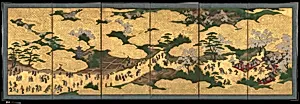
狩野派 東山遊楽図屏風|Amusements at Higashiyama in Kyoto
ca. 1620s
Medium
Pair of six-panel folding screens; ink, color, gold, mica, and gold leaf on paper
Dimensions
Image (each screen): 33 1/16 in. × 8 ft. 11 1/2 in. (84 × 273 cm)
Classification
Paintings
Culture & Period
Japan · Edo period (1615–1868)
Department
Asian Art
Museum
Metropolitan Museum of Art, New York, NY
Credit
Purchase, 2013 Benefit Fund and Mary and James G. Wallach Foundation Gift, 2014
Accession Number
2014.491.1, .2
Rights
Public Domain
Tags
Art Historical Context
This exquisite pair of six-panel folding, titled *Amusements at Higashiyama Kyoto*, hails from the Kano School, Japan's preeminent professional painting workshop during the Edo period (5–1868). around the 1620s, these byōbu (folding screens) measure an impressive 33 inches high by nearly 9 feet wide each, transforming rooms into immersive panoramas. Crafted with ink, vibrant colors, gold and mica flecks, and lavish gold leaf on paper, exemplify the Kano style: bold outlines, asymmetrical compositions, and a shimmering backdrop that evokes opulent interiors of samurai elites. The screens depict lively scenes of banquets and leisurely gatherings amid Higashiyama's scenic hills in Kyoto, featuring elegant men and women in traditional attire enjoying music, dance, and feasting. This portrayal captures the era's cultural flourishing under the Tokugawa shogunate, when such amusements symbolized refined taste and social harmony. Gold leaf and mica not only add a radiant, jewel-like depth but also reflected candlelight in dimly lit rooms, heightening the festive mood. As a Metropolitan Museum of Art treasure, these screens highlight the Kano School's dominance in decorative arts, blending realism with poetic elegance to adorn the homes of the powerful. They offer a window into Edo Japan's blend of nature, revelry, and artistry.