
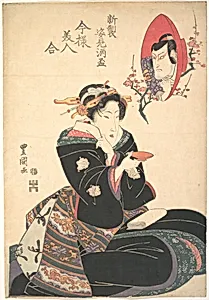
An Actor's Image in a Sake Cup
ca. 1825
Medium
Woodblock print; ink and color on paper
Dimensions
Vertical ōban; Image: 15 1/2 × 10 3/4 in. (39.4 × 27.3 cm)
Classification
Prints
Culture & Period
Japan · Edo period (1615–1868)
Department
Asian Art
Museum
Metropolitan Museum of Art, New York, NY
Credit
Purchase, Jack Greene Gift, 2001
Accession Number
2001.715.5
Rights
Public Domain
Tags
Art Historical Context
In the vibrant world of Edo-period Japan (1615–1868), Utagawa Toyige's *An Actor's Image in a Sake Cup* (ca. 1825) captures the playful spirit of ukiyo-e, the "pictures of the floating world" that celebrated theater, beauty, and everyday pleasures. This woodblock, in the popular vertical ōban formatmeasuring about 15½ × 10¾ inches), depicts an actor—likely a kabuki performer, possibly in a female role as an onnagata—reflected or ingeniously portrayed within a sake cup. Toyoshige, a member of the influential Utagawa school, specialized in yakusha-e (actor prints), which idolized stage stars and brought their charisma to the masses. Woodblock printing techniques shine here: layers of ink and color on paper, carved by artisans from Toyoshige's design, allowed for affordable production and vivid details like flowing robes and expressive faces. These prints were pasted in homes or sold at theaters, fueling kabuki's cultural frenzy in urban Edo (modern Tokyo). The sake cup motif adds whimsy, blending revelry with artistry—a nod to Japan's saké-loving society. Housed in the Metropolitan Museum of Art's Asian Art collection, this piece highlights how ukiyo-e democratized fame, turning actors into superstars long before photography. Visitors, imagine peering into your own cup and glimpsing a legend!