
Ancient Triumphal Procession
1551 to 1600
Medium
pen and black ink with gray wash on laid paper
Dimensions
overall: 6.1 x 27.2 cm (2 3/8 x 10 11/16 in.)
Classification
Drawing
Department
CG-E
Museum
National Gallery of Art, Washington, D.C.
Credit
Ailsa Mellon Bruce Fund
Accession Number
1988.16.1
Rights
Public Domain
Art Historical Context
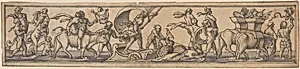
This delicate drawing by Daniel Lindtmayer captures the grandeur of an ancient Roman triumphal procession on a remarkably small scale. Created between 1551 and 1600, the work reflects the Renaissance fascination with classical antiquity, as artists across Europe revisited the triumphs of victorious generals and emperors. The elongated format, measuring just over ten inches wide, suggests it may have been conceived as a study or design element, possibly for a larger decorative scheme such as stained glass or a frieze. Lindtmayer employs pen and black ink with gray wash to create rhythmic movement and depth. The fluid lines define soldiers, captives, and ceremonial floats, while subtle washes model forms and evoke the play of light across armor and banners. This technique was favored in the period for its ability to convey both precision and atmospheric effect on paper. As a work on laid paper acquired through the Ailsa Mellon Bruce Fund, the drawing offers modern viewers an intimate glimpse into how sixteenth-century artists interpreted and revived the visual language of ancient Rome. Its modest size rewards close looking, revealing the careful orchestration of figures that once celebrated imperial power.