
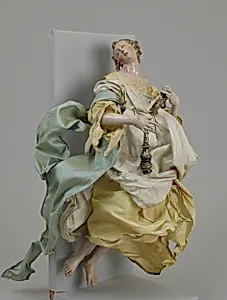
Angel
Unknown Artist
second half 18th century
Medium
Polychromed terracotta head; wooden limbs and wings; body of wire wrapped in tow; various fabrics
Dimensions
H. 14 3/8 in. (36.5 cm.)
Classification
Crèche
Culture
Italian, Naples
Department
European Sculpture and Decorative Arts
Museum
Metropolitan Museum of Art, New York, NY
Credit
Gift of Loretta Hines Howard, 1964
Accession Number
64.164.21a–c
Rights
Public Domain
Tags
Art Historical Context
In the lively tradition of Neapolitan presepi—elaborate Nativity scenes that captivated 18th-century Italy—this charming *Angel* figure embodies the theatrical spirit of Naples during the second half of the 1700s. Created by an unknown artist, it hails from a culture where crèches were not just religious displays but grand spectacles, often adorning aristocratic homes and churches during Christmas. Donated to the Metropolitan Museum of Art in 1964 by Loretta Hines Howard, this 14⅜-inch (36.5 cm) sculpture invites visitors to imagine bustling manger scenes alive with heavenly messengers. Crafted with masterful realism, the angel features a polychromed terracotta head—painted in vivid colors for lifelike flesh tones and expressions—paired with wooden limbs and wings for graceful movement. Its body, ingeniously made from wire wrapped in tow (a coarse fiber) and dressed in various fabrics, allowed for poseable articulation, a hallmark of Neapolitan craftsmanship. This mixed-media technique highlighted the sculptors' skill in blending painting, carving, and textiles, making figures appear almost animated in dimly lit chapels. As part of the European Sculpture and Decorative Arts collection, this *Angel* reflects Naples' Baroque legacy of dramatic piety and artistry, where angels bridged the divine and everyday, enchanting worshippers and collectors alike. A delightful glimpse into festive devotion! (198 words)