
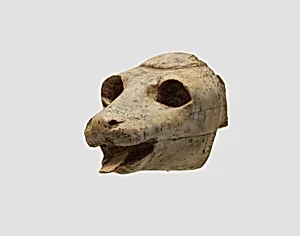
Animal head carved in the round
Unknown Artist
ca. 8th–7th century BCE
Medium
Ivory
Dimensions
0.55 x 0.59 x 0.91 in. (1.4 x 1.5 x 2.31 cm)
Classification
Ivory/Bone-Reliefs
Culture & Period
Assyrian · Neo-Assyrian
Department
Ancient Near Eastern Art
Museum
Metropolitan Museum of Art, New York, NY
Credit
Rogers Fund, 1961
Accession Number
61.197.13
Rights
Public Domain
Tags
Art Historical Context
This exquisite ivory carving of an animal head, likely depicting a dog, hails from the Neo-Assyrian periodca. 8th–7th century BCE), time when the Assyrian Empire the Ancient Near East with its military might and opulent palaces. Crafted in the round—meaning fully sculpted on all sides—this tiny masterpiece measures just 0.55 x 0.59 x 0.91 inches, suggesting it adorned furniture, handles, or personal objects in elite settings. Ivory, a luxury material often imported from distant regions like Africa or India, symbolized wealth and power, highlighting the empire's vast trade networks. The unknown Assyrian artist's skill shines in the intricate detailing of the animal's features, capturing a vigilant gaze and textured fur with remarkable precision for such a small scale. Dogs held cultural importance in Assyrian society, often portrayed as loyal hunters or guardians in art, reflecting themes of protection and the hunt central to royal life. Excavated ivories like this one, from sites such as Nimrud, reveal sophisticated workshops where artisans blended local and foreign influences. Today, at the Metropolitan Museum of Art (Rogers Fund, 1961), this fragile relic invites us to marvel at the enduring finesse of ancient craftsmanship, bridging us to a world of imperial grandeur.