
Anna Claypoole Peale
1812
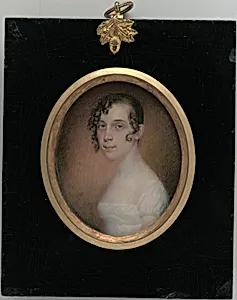
Medium
Watercolor on ivory
Dimensions
3 x 2 5/8 in. (7.5 x 6.8 cm)
Classification
Painting, miniature
Culture
American
Department
The American Wing
Museum
Metropolitan Museum of Art, New York, NY
Credit
Fletcher Fund, 1938
Accession Number
38.146.8
Rights
Public Domain
Tags
Art Historical Context
In the early 19th century, Peale crafted this delicate portrait miniature of Anna Claypoole Peale, dated 1812 and measuring just 3 x 2⅝ inches. Rendered in watercolor on ivory—a favored medium for such intimate works—this piece exemplifies the miniaturist's art, where fine brushes and translucent pigments captured lifelike details on a tiny, luminous surface. Housed in The Metropolitan Museum of Art's American Wing, it the Federal-era elegance of American portraiture. James Peale, a prominent Philadelphia artist and brother to painter Charles Willson Peale, specialized in these pocket-sized gems, often worn as lockets or brooches. Miniatures like this served as cherished mementos for loved ones, especially during times of separation, blending technical precision with emotional warmth. Anna, depicted here, was herself a skilled miniaturist, carrying on the Peale family's artistic legacy in a male-dominated field. This artwork highlights women's roles in early American culture, both as subjects and creators, while showcasing the miniaturist's mastery of scale and subtlety. Its survival underscores the enduring appeal of personal portraiture in a young nation's burgeoning art scene.
About the Artist
James Peale · 1749–1831
James Peale was an American painter born in 1749, the younger brother of the more famous Charles Willson Peale, and a member of one of the most remarkable artistic families in the history of American art. Trained largely by his brother, James worked for many years in Charles Willson's shadow, assisting with portraits and miniatures in the Philadelphia studio before developing his own independent p...