
Antiphonary
Unknown Artist
15th–16th century
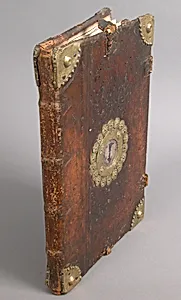
Medium
Tempera, ink and gold on paper; leather binding
Dimensions
Overall: 15 1/2 x 9 1/2 x 1 3/8in. (39.4 x 24.1 x 3.5cm)
Classification
Manuscripts and Illuminations
Culture
Spanish
Department
Medieval Art
Museum
Metropolitan Museum of Art, New York, NY
Credit
Gift of Joseph W. Drexel, 1889
Accession Number
89.27.2
Rights
Public Domain
Art Historical Context
Step into the luminous world of medieval Spanish devotion with this exquisite *Antiphonary*, a manuscript from the 15–16th century. Crafted by an unknown artist, this book of antiphons—short chants sung during Catholic services—served as an essential tool for church musicians and clergy. Its Spanish origins place it amid the vibrant cultural and religious fervor of late medieval Iberia, where illuminated manuscripts bridged art and faith, preserving sacred texts for communal worship. The artwork's medium of tempera, ink, and gold on paper, bound in leather, showcases masterful illumination techniques. Delicate tempera paints created vivid miniatures and historiated initials, while gold leaf added a heavenly glow, catching candlelight in dimly lit chapels. Though paper was less common than vellum for such volumes, it reflects evolving bookmaking practices. Measuring 15½ x 9½ x 1⅜ inches, its portable size made it practical for monastic or cathedral use. A cherished gift to the Metropolitan Museum of Art from Joseph W. Drexel in 1889, this antiphonary endures as a testament to Spain's artistic legacy in the Medieval Art department, inviting us to ponder the voices that once filled sacred spaces with melody.