
Anubis
Unknown Artist
664–30 B.C.
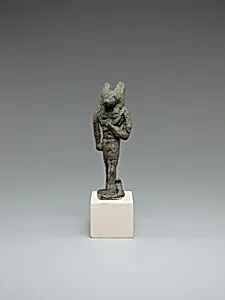
Medium
Bronze or cupreous alloy
Dimensions
h. 6.3 cm (2 1/2 in.)
Classification
Statuette, Anubis
Period
Late Period–Ptolemaic Period
Department
Egyptian Art
Museum
Metropolitan Museum of Art, New York, NY
Credit
Gift of Darius Ogden Mills, 1904
Accession Number
04.2.428
Rights
Public Domain
Art Historical Context
Behold the enchanting bronze figurine of *Anubis*, a jackal-headed deity from ancient's Late Period to Ptolemaic era (664–30 B.C.). Standing just 6.3 cm (2½ in.) tall, thisutive masterpiece, crafted from bronze or cupreous alloy captures the god in his iconic form—poised and vigilant, embodying eternal guardianship. housed in the Metropolitan Museum of Art's Egyptian Art Department, it entered the collection as a gift from Darius Mills in 1904Anubis held profound cultural significance as the protector of the dead, overseer of mummification, and guide through the underworld. During the Late and Ptolemaic periods—a time of political upheaval under native pharaohs and later Greek Ptolemaic rulers—such small-scale bronzes were likely votive offerings, amulets, or shrine figures, reflecting enduring religious devotion amid cultural blending. Bronze, a prestigious alloy of copper and tin, symbolized durability and divine permanence, often cast using the lost-wax technique for intricate details. This artifact invites us to marvel at ancient Egyptians' masterful blend of piety and artistry, where even a tiny statue channeled cosmic powers. Gaze closely to feel Anubis's watchful presence across millennia.