
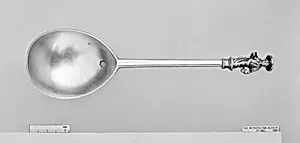
Apostle spoon
1565–66
Medium
Silver, parcel gilt
Dimensions
Length: 6 3/4 in. (17.1 cm)
Classification
Metalwork-Silver
Culture
British, London
Department
European Sculpture and Decorative Arts
Museum
Metropolitan Museum of Art, New York, NY
Credit
Bequest of Mary Strong Shattuck, 1935
Accession Number
35.80.88
Rights
Public Domain
Tags
Art Historical Context
This exquisite *Apostle spoon*, crafted by London silversmith John Foxe between 1565 and 1566, exemplifies the finest Tudor-era metalwork. Fashioned from silver with selective parcel gilding—gold applied to highlight the figural finial—it measures a delicate 6 3/4 inches in length. Housed in the Metropolitan Museum of Art's European Sculpture and Decorative Arts collection, this piece bears London's hallmark, attesting to its origin in one of England's premier silver-making centers during Queen Elizabeth I's reign. Apostle spoons like this one were cherished luxury items in 16th-century Britain, often produced in sets of 12 (one for each apostle) or 13 (including Christ). They served as christening gifts for the elite, symbolizing piety, faith, and prosperity amid the Protestant Reformation's cultural shifts. Foxe's workmanship reflects the Renaissance influence on English decorative arts, blending intricate chasing and engraving with symbolic religious iconography. The parcel-gilt technique not only enhanced durability and luster but also elevated the spoon's aesthetic appeal, making it a multifunctional heirloom for dining and display. Bequeathed to the Met in 1935 by Mary Strong Shattuck, it offers visitors a tangible glimpse into Elizabethan opulence and devotion.