
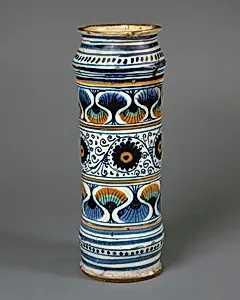
Apothecary jar (albarello)
Unknown Artist
ca. 1480
Medium
Maiolica (tin-glazed earthenware)
Dimensions
Height: 13 1/16 in. (33.2cm)
Classification
Ceramics-Pottery
Culture
Italian, probably Faenza
Department
Robert Lehman Collection
Museum
Metropolitan Museum of Art, New York, NY
Credit
Robert Lehman Collection, 1975
Accession Number
1975.1.1051
Rights
Public Domain
Art Historical Context
This elegant apothecary jar, known as an *albarello*, hails from Italy around 1480, likely in Faenza—a renowned hub of maiolica production during the Renaissance Standing at just over 13 inches tall, its distinctive cylindrical form with a flared foot and neck was designed for practical storage in pharmacies, allowing jars to stack securely while displaying labels for medicinal contents like herbs, ointments, or spices. Part of the Robert Lehman Collection at The Metropolitan Museum of Art, piece exemplifies everyday Renaissance luxury, blending utility with artistry. Maiolica, or tin-glazed earthenware, was a revolutionary technique in 15th-century Italy, where a white tin-oxide glaze created a smooth canvas for vibrant painted designs over fired clay. Faenza's workshops excelled in this method, producing wares that rivaled fine painting with their bold colors and intricate motifs—though specifics of this jar's decoration remain understated, its form speaks to the era's precision craftsmanship. These jars were essential to apothecaries, symbolizing the growing sophistication of medicine and trade in herbal remedies across Europe. As a survivor from the late medieval world, this albarello offers a tactile glimpse into Renaissance daily life, where even apothecary tools were elevated to decorative treasures. Visitors can appreciate how such objects bridged art, science, and commerce in historic Italy.