
"Apotheosis of Voltaire"
1785–90
Medium
Linen
Dimensions
L. 43 x W. 36 inches 109.2 x 91.4 cm
Classification
Textiles-Printed
Culture
French, Nantes
Department
European Sculpture and Decorative Arts
Museum
Metropolitan Museum of Art, New York, NY
Credit
Gift of William Sloane Coffin, 1926
Accession Number
26.265.29
Rights
Public Domain
Tags
Art Historical Context
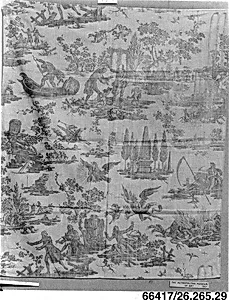
"Apotheosis of Voltaire," created by the French printer Dubern in Nantes between 1785 and 1790, is a striking printed linen textile measuring 43 by 36 inches. Produced shortly after Voltaire's death in 1778, this work celebrates the Enlightenment philosopher's legacy through a dramatic scene of deification, blending human figures—likely including men in boats—with symbolic birds, evoking ascent to the heavens. Housed in the Metropolitan Museum of Art's Department of European Sculpture and Decorative Arts, it exemplifies the vibrant textile traditions of late 18th-century France. Nantes was a thriving center for printed cotton fabrics, known as *indiennes*, which combined imported techniques from India with local innovation. Dubern's piece reflects this craftsmanship, using precise printing methods—possibly woodblocks or early copperplates—to achieve bold colors and intricate details on linen. During a time of political ferment leading to the French Revolution, glorifying Voltaire underscored the era's reverence for reason and reform, making such textiles not just decorative but culturally resonant for homes and garments. This artwork highlights the intersection of art and everyday life, transforming philosophical ideals into accessible furnishings. Its survival as a gift to the Met in 1926 offers a window into how ordinary objects immortalized revolutionary thinkers.