
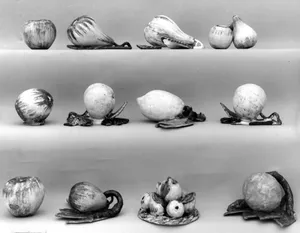
Apple
Unknown Artist
ca. 1750–75
Medium
Tin-glazed earthenware
Dimensions
Overall (approximate): 2 1/2 × 3 1/2 in. (6.4 × 8.9 cm)
Classification
Ceramics-Pottery
Culture
Dutch, Delft
Department
European Sculpture and Decorative Arts
Museum
Metropolitan Museum of Art, New York, NY
Credit
Gift of Henry G. Marquand, 1894
Accession Number
94.4.42
Rights
Public Domain
Art Historical Context
Nestled in the Metropolitan Museum of Art's European Sculpture and Decorative Arts collection, this charming "Apple" (ca. 1750–75) is a delightful example of Dutch Delft tin-glazed earthenware. just 2½ × 3½ inches, this petite ceramic fruit captures the lifelike plumpness and subtle contours of a real apple, showcasing the potters' mastery in modeling everyday objects into whimsical decorative pieces. Gifted to the Museum by Henry G. Marquand in 1894, it exemplifies the playful trompe l'oeil style popular in 18th-century Europe. Delftware, produced in the city of Delft, Netherlands, flourished from the 17th to 18th centuries as Dutch artisans imitated luxury Chinese porcelain using affordable earthenware. The tin-glaze technique—applying a lead-tin oxide coating fired at low temperatures—created a smooth, opaque white surface ideal for vibrant hand-painted decorations in blues, whites, and polychrome hues. Though the artist remains unknown, this piece highlights the technical innovation and commercial success of Delft factories, which exported these versatile ceramics worldwide for tableware, tiles, and ornamental displays. Culturally, such faux fruits like this apple served as centerpieces for lavish dinners or shelf decorations, blending utility with artistry in bourgeois homes. Its survival speaks to the enduring appeal of Delft's accessible elegance, bridging fine art and everyday life in the Age of Enlightenment.