
Apple Peeler
c. 1939
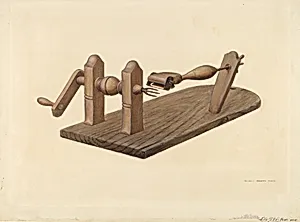
Medium
watercolor, graphite, colored pencil, and goauche on paperboard
Dimensions
overall: 26.5 x 35.7 cm (10 7/16 x 14 1/16 in.) Original IAD Object: base: 22" long; 7" wide; uprights: 4 1/2" high; Turning arm: 8" long; cutting arm: 9" long
Classification
Index of American Design
Department
CG-W
Museum
National Gallery of Art, Washington, D.C.
Credit
Index of American Design
Accession Number
1943.8.11154
Rights
Public Domain
Art Historical Context
Henrietta S. Hukill's *Apple Peeler* (c. 1939) is a meticulous rendering from the Index of American Design, a Works Progress Administration (WPA) project that employed artists during the Great Depression to document America's folk art and everyday objects. This watercolor, graphite, colored pencil, and gouache work on paperboard captures a classic 19th-century kitchen tool—measuring about 22 inches long with intricate uprights, turning arm, and cutting blade—preserving its functional beauty for future generations. Hukill's mixed-media technique shines in her precise depiction of the peeler's wooden and metal components, blending realistic shading with vibrant highlights to evoke the object's tactile warmth and utility. As part of the National Gallery of Art's collection, it exemplifies the Index's mission to elevate utilitarian designs as cultural treasures, showcasing American ingenuity in rural homemaking. This piece reflects a pivotal era when federal programs championed artists like Hukill, highlighting how simple tools embodied pioneer resourcefulness and the charm of vernacular design. Visitors will appreciate its nod to the unsung artistry in everyday life.