
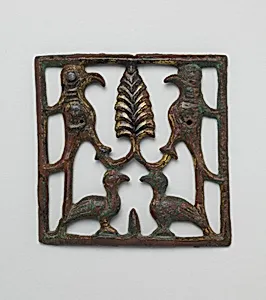
Appliqué Plaque with a Tree and Four Birds
Unknown Artist
12th century
Medium
Brass; cast, gilded
Dimensions
H. 2 1/2 in. (6.4 cm) W. 2 9/16 in. (6.5 cm) D. 1/16 in. (0.2cm)
Classification
Metal
Department
Islamic Art
Museum
Metropolitan Museum of Art, New York, NY
Credit
Gift of Dr. Sidney A. Charlat, in memory of Newman and Adele Charlat, 1949
Accession Number
49.71.1
Rights
Public Domain
Tags
Art Historical Context
This exquisite *Appliqué Plaque with a Tree and Four Birds crafted in the 12th century, exemplifies the refined metalwork of Islamic art. Measuring just 2½ by 2⅜ inches, this delicate brass plaque was cast and then gilded—coated with a thin layer of gold to achieve a luminous, luxurious sheen. Such techniques were hallmarks of medieval Islamic artisans, who poured molten brass into molds for precise detailing before applying gilding, often using mercury amalgam for durability and brilliance. Now housed in the Metropolitan Museum Art's Department of Islamic Art, it was a generous gift in 1949. Likely produced in regions like Syria or Egypt during the height of the Seljuk or Fatimid eras, the plaque served as a decorative appliqué, probably adorning furniture, boxes, or ceremonial objects. Its slim profile (just 1/16 inch thick) allowed it to be riveted or soldered onto wooden or leather surfaces, blending functionality with artistry. The central tree motif, flanked by four birds in symmetrical flight, evokes the lush gardens of paradise—a recurring theme in Islamic decorative arts, symbolizing abundance, harmony with nature, and spiritual renewal. Though the artist remains unknown, this tiny treasure reveals the sophistication of 12th-century Islamic craftsmanship, where everyday objects became portals to beauty and the divine. Visitors will appreciate its intimate scale, inviting close inspection of the intricate motifs that once glittered in a bustling medieval world.