
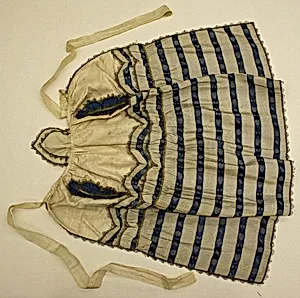
Apron
Unknown Artist
late 17th century
Medium
silk, metal
Classification
Apron
Culture
European
Department
Costume Institute
Museum
Metropolitan Museum of Art, New York, NY
Credit
Purchase, Gifts from Various Donors, 1980
Accession Number
1980.408.3
Rights
Public Domain
Art Historical Context
Step into the opulent world of late 17th European fashion with this exquisite silk and metal apron from the Metropolitan Museum of Art's Costume Institute.ed during the Baroque era, when extravagance defined elite attire, this piece exemplifies the period's love for luxurious textiles. Silk provided a shimmering base, while intricate metal threads—likely gold silver—added a regal gleam, transforming a utilitarian garment into a statement of status artistry. Aprons like this were more than protective coverings; they were fashionable accessories worn by women across social classes, from domestic settings to courtly gatherings. The use of metal embroidery techniques, such as couching or laid work, highlighted the skill of anonymous artisans, who wove metallic filaments for durability and dazzle under candlelight. This reflects Europe's booming textile trade and the era's technical innovations in weaving and embellishment. Acquired through purchases and gifts in 1980, this apron offers a tangible glimpse into everyday elegance, underscoring the Costume Institute's mission to preserve fashion's cultural legacy. Visitors can appreciate how such garments bridged functionality and fine art, revealing the hidden artistry of historical wardrobes.