
Apron
Unknown Artist
fourth quarter 19th century
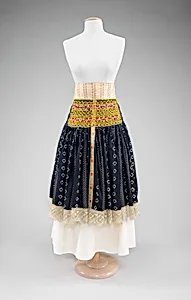
Medium
cotton, silk, wool
Dimensions
Length at CB: 30 1/4 in. (76.8 cm)
Classification
Accessory-Waist-Womenswear
Culture
Slovak
Department
Costume Institute
Museum
Metropolitan Museum of Art, New York, NY
Credit
Brooklyn Museum Costume Collection at The Metropolitan Museum of Art, Gift of the Brooklyn Museum, 2009; Museum Expedition 1920 & 1921, Robert B. Woodward Memorial Fund, 1921
Accession Number
2009.300.2965
Rights
Public Domain
Art Historical Context
Step into the vibrant world of 19th-century Slovak culture with this exquisite apron, a women's waist accessory crafted from a harmonious blend of cotton, silk, wool. Measuring 30¼ inches (76.8 cm) in length at the center back, mixed textiles reflect both everyday practicality—cotton and wool for durability—and touches of elegance from lustrous silk, ideal for a garment that protected clothing during work while serving as a canvas for cultural expression. In Slovak tradition, such aprons were essential elements of women's attire, often worn over skirts in rural communities during the final decades of the Austro-Hungarian Empire. They symbolized modesty, labor, and regional identity, bridging the gap between utility and adornment in pre-industrial life. Though the artist remains unknown, the piece exemplifies the anonymous craftsmanship of folk artisans, where materials like these were hand-selected and woven to withstand daily rigors while showcasing subtle luxury. Acquired through Museum Expeditions in 1920 and 1921 as part of the Brooklyn Museum Costume Collection—now gifted to The Metropolitan Museum of Art—this apron offers a tangible link to Slovakia's ethnographic heritage. It invites us to appreciate how ordinary objects preserved cultural stories across generations.