
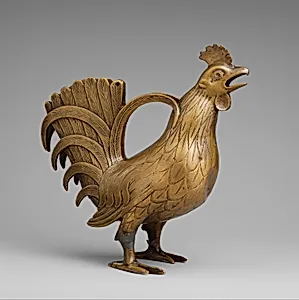
Aquamanile in the Form of a Rooster
Unknown Artist
13th century
Medium
Copper alloy
Dimensions
9 15/16 x 4 1/8 x 9 3/4 in. (25.2 x 10.5 x 24.7 cm) Thickness: 11/16-15/16 in. (0.18-0.24 cm)
Classification
Metalwork-Copper alloy
Culture
German
Department
The Cloisters
Museum
Metropolitan Museum of Art, New York, NY
Credit
The Cloisters Collection, 1989
Accession Number
1989.292
Rights
Public Domain
Tags
Art Historical Context
Step into the medieval world with charming *Aquamanile in the Form of a Ro*, a 13th-century German masterpiece from The Cloisters Collection at the Museum of Art. Craft by an unknown artist from copper alloy, aquaman like this were practical yet ornate vessels used for pouring water during handwashing rituals—essential in both liturgical ceremonies and affluent households across medieval Europe. This rooster-shaped example, standing about 10 inches tall, exemplifies the Rhineland's renowned metalworking tradition, where functional objects doubled as sculptural art. The medium's thin walls (just 0.18–0.24 cm thick) highlight exceptional craftsmanship, likely involving hammering and soldering techniques to create a hollow, spout-equipped form that allowed water to flow gracefully from the beak or tail. Roosters held rich symbolism in medieval culture, evoking vigilance, the dawn, and Christian resurrection themes, making this piece not just utilitarian but a vibrant emblem of faith and daily life. Acquired in 1989, this diminutive yet dynamic work invites you to appreciate the ingenuity of anonymous artisans who transformed everyday metal into lively, symbolic sculpture. A true gem of The Cloisters' medieval treasury!