
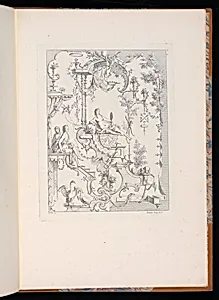
Arabesque Ornament Designs
Medium
Classification
Department
Smithsonian Collection
Museum
Smithsonian American Art Museum
Credit
Purchased for the Museum by the Advisory Council
Accession Number
1921-6-422-8
Rights
Public Domain
About this artwork
Research in Progress
Art Historical Context
Claude Gillot's *Arabesque Ornament Designs a set of prints published between 1749 and 1761, showcases the French artist's mastery of intricate decorative motifs long after his death in 1722. As a painter, engraver, and influential teacher to Antoine Watteau, Gillot was a key precursor to the Rococo style, blending whimsical fantasy with elegant ornamentation. These posthumous prints, now in the Smithsonian American Art Museum's collection reflect his designs' enduring appeal, acquired through the museum's Advisory Council purchase. Arabesques—flowing, interlacing patterns of foliage, scrolls, and mythical figures—originated in Islamic art but flourished in European decorative arts during the Baroque era. Gillot's versions exemplify this tradition, offering versatile templates for architects, furniture makers, and textile designers. Printed as a practical resource, they highlight the era's fascination with *grotesques*, playful motifs revived from ancient Roman frescoes and adapted for opulent 18th-century interiors. Though research on this specific suite is ongoing, these prints capture the lively spirit of French ornamental design, bridging Renaissance revival and Rococo exuberance. Visitors will appreciate their timeless elegance, perfect for imagining gilded panels in a Versailles salon.