
Arched Harp (shoulder harp)
Unknown Artist
ca. 1390–1295 B.C.
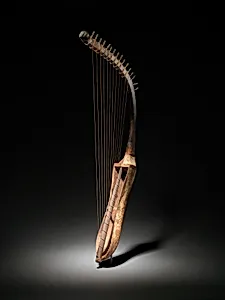
Medium
Wood
Dimensions
L. (diagonally) 82 cm (32 5/16 in.); soundbox: L. 36 cm (14 3/16 in.
Classification
Music, harp, arched, naviform, boat shaped
Period
New Kingdom
Department
Egyptian Art
Museum
Metropolitan Museum of Art, New York, NY
Credit
Rogers Fund, 1943
Accession Number
43.2.1
Rights
Public Domain
Tags
Art Historical Context
This elegant arched harp, crafted from wood during Egypt’s New Kingdom (Dynasty 18, ca. 1390–1295 B.C.), exemplifies the refined musical culture of the period. Also known as a shoulder harp, its gracefully curved frame would have rested against the player’s shoulder, allowing for expressive performances in both royal courts and temple ceremonies. Music played a vital role in ancient Egyptian society, accompanying rituals honoring the gods, celebrations, and daily life among the elite. The choice of wood as the medium highlights the skilled woodworking traditions of the time, when artisans shaped resonant soundboxes and slender necks to produce warm, resonant tones. Surviving examples like this one, now in the Metropolitan Museum of Art’s collection, offer rare insight into the instruments depicted in tomb paintings and reliefs, where musicians are shown entertaining pharaohs and deities alike. As a testament to the New Kingdom’s artistic and cultural flourishing, the harp reminds us how music bridged the earthly and divine realms, enriching both ceremonial practice and personal expression in one of history’s most enduring civilizations.