
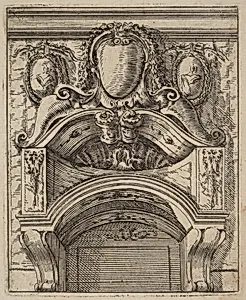
Architectural Motif with Three Shields, Two with Figures
c. 1690
Medium
etching on laid paper
Dimensions
plate: 11.3 x 9.2 cm (4 7/16 x 3 5/8 in.) sheet: 17.4 x 12.2 cm (6 7/8 x 4 13/16 in.)
Classification
Department
CG-E
Museum
National Gallery of Art, Washington, D.C.
Credit
Ailsa Mellon Bruce Fund
Accession Number
1997.10.4
Rights
Public Domain
Art Historical Context
In the late Baroque era, around 1690, Italian engraver Carlo Antonio Buffagnotti *Architectural Motif with Shields, Two with Figures a delicate etching on laid paper now housed in the National Gallery Art. Buffagnotti, active in Bologna, was renowned for his precise reproductive prints and ornamental designs, often drawing from architectural fantasies and decorative motifs inspired by the grandeur of Italian palaces and churches. This small plate (11.3 x 9.2 cm) captures the opulent aesthetic of the period, where elaborate embellishments symbolized status and artistry. The composition features a classical architectural frame adorned with three shields—two bearing figures, likely allegorical or heraldic emblems—evoking the period's fascination with heraldry and symmetry. Etching allowed Buffagnotti to achieve fine lines and rich tonal variations, biting acid into a metal plate to produce intricate details unachievable by hand alone. Printed on laid paper, which shows the mesh marks of its mold, the work exemplifies 17th-century printmaking techniques that democratized high art for collectors and designers. This piece reflects the cultural role of prints as both artistic objects and pattern books for architects and craftsmen, bridging fine art and applied design. Acquired through the Ailsa Mellon Bruce Fund, it invites visitors to appreciate the meticulous craft behind Baroque splendor.