
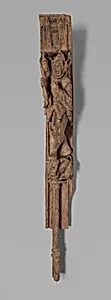
Architectural Support with a Jester
Unknown Artist
1524–1549
Medium
Oak
Dimensions
83 1/16 × 9 1/2 × 9 1/4 in., 101 lb. (211 × 24.1 × 23.5 cm, 45.8 kg)
Classification
Woodwork-Architectural
Culture
French
Department
The Cloisters
Museum
Metropolitan Museum of Art, New York, NY
Credit
The Cloisters Collection, 1974
Accession Number
1974.295.1
Rights
Public Domain
Tags
Art Historical Context
Nestled in The Cloisters at the Metropolitan Museum of Art, this *Architectural Support with a Jester* is a striking example of French Renaissance woodwork from 1524–1549. Carved from a massive slab of oak—measuring over 83 inches tall and weighing 101 pounds—this robust piece served as a structural corbel or bracket, likely supporting beams in a grand chateau, church, or public hall. The unknown artist's skillful rendering of a jester figure captures the playful spirit of the era, where whimsical motifs brought humor and humanity to architecture. Oak was prized for its durability and fine grain, allowing intricate carving that withstands centuries. During France's early Renaissance, such supports blended Gothic traditions with emerging classical influences, adorning elite spaces to reflect wealth and wit. Jesters, symbols of folly and courtly entertainment, were popular decorative subjects, reminding viewers of life's lighter side amid opulent settings. Today, this Cloisters Collection gem (acquired in 1974) invites us to imagine the lively scenes it once framed—perhaps feasts or festivals. Its monumental scale and expressive carving highlight the craftsmanship of anonymous artisans whose work shaped daily life in 16th-century France.