
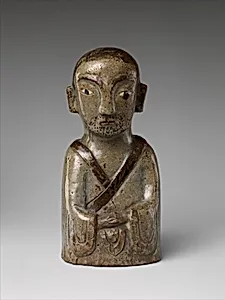
청자 철화 나한상 고려|靑磁鐵畫羅漢像 高麗|Arhat
Unknown Artist
13th–14th century
Medium
Stoneware with iron-brown decoration under celadon glaze
Dimensions
H. 7 in. (17.8 cm); W. 3 3/8 in. (8.6 cm); D. 2 3/4 in. (7 cm)
Classification
Ceramics
Culture & Period
Korea · Goryeo dynasty (918–1392)
Department
Asian Art
Museum
Metropolitan Museum of Art, New York, NY
Credit
Gift of Edna Bahr, 1962
Accession Number
62.97.9
Rights
Public Domain
Tags
Art Historical Context
This exquisite celadon-glazed stoneware statue depicts an *arhat* (Korean: *nahan*), one of the enlightened disciples of the Buddha in Buddhist tradition. Crafted during Korea's Goryeo dynasty918–1392), specifically in the 13th–14th century, it stands just 7 inches tall, it was likely made for private devotion or a scholar's study rather than large temple display. The Goryeo period was a golden age for Korean Buddhism, with celadon ceramics reaching unparalleled refinement, symbolizing purity and harmony through their subtle jade-green glaze. The artwork's standout feature is its *cheolhwa* (iron-brown painting) technique: fine iron pigment was applied under the celadon glaze before firing, creating intricate details like the arhat's flowing robes, expressive face, and dynamic pose that emerge subtly through the translucent surface. This method highlights Goryeo potters' mastery of high-fired stoneware, where the glaze's crackle and depth enhance the spiritual aura. Such ceramic sculptures are rare, blending sculpture with the era's iconic celadon tradition. A gift to the Metropolitan Museum of Art in 1962, this piece offers a window into Goryeo's fusion of artistry and faith, inviting visitors to appreciate the serene wisdom etched in clay.