
Arhat (Luohan)
Unknown Artist
late 19th century
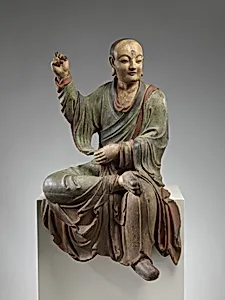
Medium
Wood (foxglove) with pigment, multiple-woodblock construction
Dimensions
H. 44 7/8 in. (114 cm)
Classification
Sculpture
Culture & Period
China · Qing dynasty (1644–1911)
Department
Asian Art
Museum
Metropolitan Museum of Art, New York, NY
Credit
Purchase, Friends of Asian Art Gifts, 2008
Accession Number
2008.67
Rights
Public Domain
Tags
Art Historical Context
This striking wooden sculpture depicts an *Arhat* (Luohan), one of the enlightened disciples of the Buddha in Chinese Buddhism. Created by an unknown artist during China's Qing dynasty (1644–1911), specifically in the late 19th century, it captures the meditative wisdom and spiritual power these figures embody. Arhats were revered as protectors of the Dharma, often portrayed in temple art as humble yet superhuman ascetics. Standing at an impressive 44 7/8 inches (114 cm) tall, this life-sized figure invites visitors to contemplate the contemplative life amid the opulent yet declining Qing era, when Buddhist devotion flourished despite political turmoil. Crafted from foxglove wood—a lightweight, fine-grained material ideal for intricate carving—the sculpture employs a sophisticated multiple-woodblock construction technique. Artisans carved separate wooden blocks for different body parts, then joined them seamlessly with mortise-and-tenon joints and pigments for lifelike skin tones and robes. This method, perfected over centuries, allowed for the fluid drapery and expressive features that bring the Arhat to life, showcasing the technical mastery of late imperial Chinese sculptors. Housed in the Metropolitan Museum of Art's Asian Art department (Purchase, Friends of Asian Art Gifts, 2008), this piece highlights Buddhism's enduring cultural role in China, blending devotion, artistry, and craftsmanship into a timeless guardian of enlightenment.