
Ariadne Abandoned by Theseus
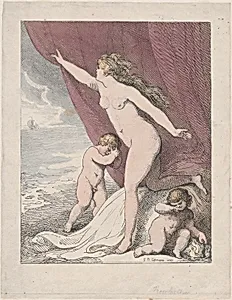
Medium
Etching and stipple, hand-colored
Dimensions
Sheet (trimmed with partial platemark at bottom): 8 1/8 × 8 1/4 in. (20.7 × 20.9 cm)
Classification
Prints
Department
Drawings and Prints
Museum
Metropolitan Museum of Art, New York, NY
Credit
The Elisha Whittelsey Collection, The Elisha Whittelsey Fund, 1959
Accession Number
59.533.1711
Rights
Public Domain
Art Historical Context
In the late 18th century, British artist Thomas Rowlandson created this evocative etching and stipple engraving after a design by Giovanni Battista Cipriani, capturing the poignant moment from Greek mythology when Theseus abandons Ariadne on the island of Naxos. Dated between 1790 and 1799, the print reflects the era's fascination with classical tales, blending neoclassical elegance with Rowlandson's distinctive satirical edge. Ariadne, asleep on the rocky shore with her veil billowing, gazes helplessly at Theseus's departing ship—a timeless symbol of betrayal and solitude that resonated in Romantic-era art. The medium of etching and stipple, hand-colored for vibrant hues, showcases innovative printmaking techniques of the time. Etching allowed precise lines for dramatic contours, while stippling—tiny dots—created subtle shading and texture, mimicking painting. Hand-coloring by skilled artisans added a jewel-like quality, making affordable prints accessible to a wider audience beyond elite collectors. At just over 8 inches square, its intimate scale invites close viewing, revealing delicate details like the sea's sparkle and Ariadne's expressive sorrow. Housed in the Metropolitan Museum of Art's Drawings and Prints department, this work from The Elisha Whittelsey Collection highlights the collaborative spirit of 18th-century reproductive prints, bridging Italian Rococo influences with British wit. It offers visitors a window into how mythology fueled artistic innovation during the Enlightenment.
About the Artist
Thomas Rowlandson|Giovanni Battista Cipriani|Thomas Rowlandson · 1756–1827
Thomas Rowlandson (1757–1827) was an English artist and caricaturist whose satirical watercolors and prints captured the social life of Georgian Britain with unparalleled wit and technical mastery. Alongside James Gillray, he is recognized as one of the greatest British graphic artists, and his distinctive flowing line and keen observations have made his work integral to understanding late 18th an...