
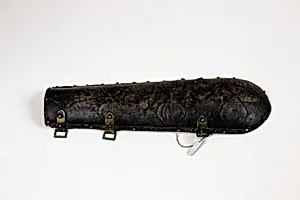
Arm Guard
Unknown Artist
18th century
Medium
Steel, brass
Dimensions
L. 13 in. (33 cm); W. 4 in. (10.2 cm); Wt. 10.7 oz. (303.3)
Classification
Armor Parts
Culture
Turkish
Department
Arms and Armor
Museum
Metropolitan Museum of Art, New York, NY
Credit
Bequest of George C. Stone, 1935
Accession Number
36.25.465
Rights
Public Domain
Art Historical Context
This elegant 18th-century Turkish guard, crafted from steel and brass, exemplifies masterful armor-making traditions of the Ottoman Empire Measuring 13 inches long and weighing just 10.7, its slender form (4 inches wide) was designed to protect the forearm while allowing agile movement for cavalry or infantry warriors. Now housed in the Metropolitan Museum of's Arms and Armor Department, it entered the collection through the generous bequest of George C. in 1935, a renowned collector of Islamic arms. The use of steel for durability paired with brass accents highlights Ottoman metalworking prowess, where smiths employed techniques like forging, riveting, and possibly gilding or etching to balance strength with aesthetic appeal. Such armor parts were essential in the empire's vast military campaigns, reflecting a culture where functionality met artistry—warriors prized gear that was both battle-ready and symbolically ornate. Though the artist remains unknown, this piece offers a window into 18th-century Turkish martial heritage, showcasing how everyday protective equipment embodied technological innovation and cultural pride. Visitors will appreciate its lightweight engineering, a testament to the ingenuity that helped Ottoman forces dominate for centuries.