
Armchair (one of a pair)
Unknown Artist
ca. 1689–1702
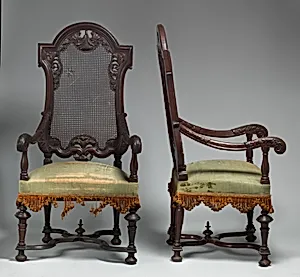
Medium
Walnut, cane
Dimensions
Each: 51 × 27 × 23 in. (129.5 × 68.6 × 58.4 cm)
Classification
Woodwork-Furniture
Culture
British
Department
European Sculpture and Decorative Arts
Museum
Metropolitan Museum of Art, New York, NY
Credit
Bequest of Benjamin Altman, 1913
Accession Number
14.40.778
Rights
Public Domain
Art Historical Context
This elegant pair of armchairs, in Britain around 1689–1702, exemplifies the refined furniture of the late 17th early 18th centuries. Standing at over four feet tall, each chair features a generous proportions suited for formal interiors, reflecting the growing comfort and status symbolism in English homes during this transitional period. Though the maker remains unknown, such pieces were likely produced by skilled London cabinetmakers catering to the emerging middle and upper classes. The chairs are masterfully constructed from walnut—a dense, beautifully grained hardwood prized for its durability and warm patina—paired with woven cane seats and backs. Cane, imported from Asia, introduced a lighter, more open aesthetic compared to earlier upholstered designs, allowing breezy ventilation while adding exotic flair. This combination highlights innovative joinery techniques, like exposed tenons and stretchers, that balanced strength with graceful lines, influencing later Georgian styles. Today, these armchairs grace the Metropolitan Museum of Art's European Sculpture and Decorative Arts galleries, thanks to the 1913 bequest of collector Benjamin Altman. They offer a tangible glimpse into British domestic life, where furniture became both functional art and a marker of refined taste.